THE HIDDEN PROBLEM
The Dirty Truth About DIY Air Con Cleaning.
If you search online, you’ll find hundreds of videos promising an easy, weekend fix for a dusty split system. A quick spray here, a wipe there, maybe a rinse of the filters, and your air conditioner will supposedly run like new.
It sounds simple. Cheap. Satisfying.
But here’s the part most DIY guides leave out: surface cleaning and deep cleaning are not the same thing. And when it comes to your air conditioner, what you can’t see is exactly what causes the biggest problems.
At Purify Air, we’re often called in after someone has already tried to clean the unit themselves. They did their best. They followed a video. Yet the smell came back, airflow stayed weak, or family members kept sneezing.
Let’s talk about why.
What DIY Cleaning Usually Covers
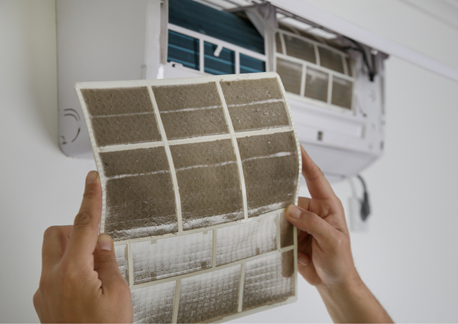
Most homeowners can safely remove and rinse the return air filters. That’s good maintenance and it should be done regularly.
Some people go a bit further. They might spray supermarket coil cleaner onto the visible fins or wipe down the plastic casing and vents.
The system looks cleaner. Mission accomplished?
Not even close.
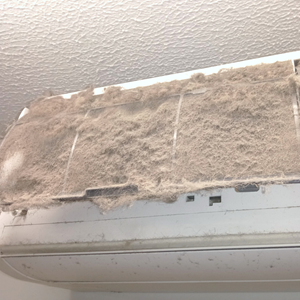

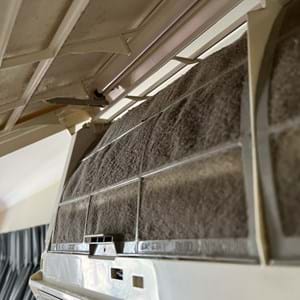
What DIY Cleaning Misses

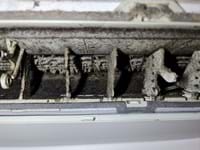
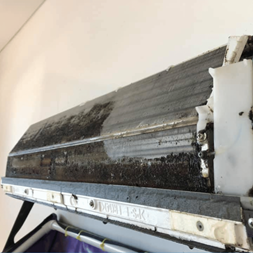
Your split system’s biggest contamination problems sit deep inside the unit, in places you simply can’t reach without dismantling components.
- The evaporator coil
Dust mixes with moisture here, creating a sticky layer that traps more debris. Over time it becomes the perfect breeding ground for mould and bacteria.
- The fan barrel (crossflow fan)
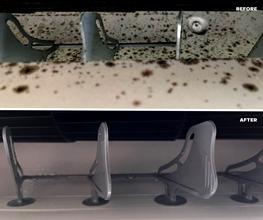
This cylindrical fan is often the worst offender. It becomes coated in grime that restricts airflow and spreads contaminants every time the system runs.
- The drain tray and line
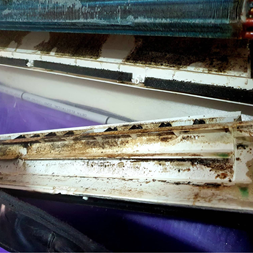
Sludge builds up, mould grows, and blockages can lead to leaks or water damage.
- Internal cavities
Dark, damp, and warm — ideal microbial real estate.
A spray from the outside rarely penetrates these areas. Even worse, partial wetting without proper extraction can actually accelerate growth.
What DIY Attempts Can Make Worse
Here’s where good intentions turn into expensive outcomes:
1. Pushing contamination deeper
Without the right pressure and containment, dirt gets driven further into the coil or onto electrics.
2. Creating moisture problems
Extra water without controlled drying equals faster mould regrowth.
3. Damaging components
Fins bend. Sensors get knocked. Electrical parts get wet. Suddenly the unit is less efficient or fails entirely.
4. Masking the smell
Fragranced sprays may hide odours temporarily, but they don’t remove the source. Once the perfume fades, the musty smell returns.
The Health Factor People Underestimate
When mould and bacteria build up inside an air conditioner, the system becomes a distribution device. Every time it switches on, particles are blown into the room.
For allergy sufferers, kids, older adults, or anyone with respiratory sensitivity, this can be significant.
If the unit smells when it starts, that’s not “normal air con smell.” That’s contamination.
Why Professional Cleaning Is Different


A proper hygienic clean isn’t a quick spray-and-go job.
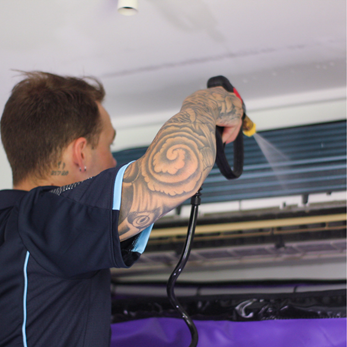
At Purify Air, the process typically involves:
-
Removing and cleaning filters
-
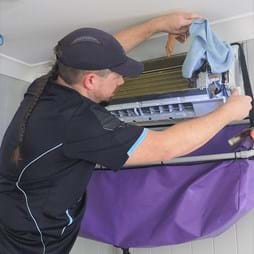
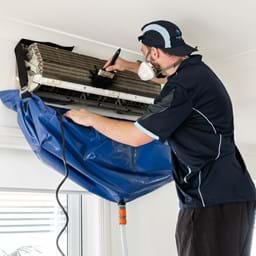
Accessing internal components
-
Applying specialised cleaning solutions
-
Using controlled-pressure washing
-
Capturing waste water
-
Treating microbial growth
-
Ensuring the system is dried correctly
-
Testing operation and airflow afterward
The aim isn’t just appearance.
It’s restoration of hygiene, efficiency, and performance.
The Cost Myth
DIY seems cheaper.
But if airflow stays poor, energy use remains high. If mould returns in weeks, you’re back where you started. And if something breaks, repairs can dwarf the price of doing it properly the first time.
Professional cleaning often extends the life of the system and reduces running costs. That’s real value.
A Better Way To Think About It

DIY filter cleaning = routine maintenance.
Professional deep cleaning = system hygiene and performance recovery.
Both matter. But they are not interchangeable.
Trying to substitute one for the other is like washing your car’s exterior and expecting the engine bay to fix itself.
The Bottom Line:
If your air conditioner smells, struggles to push air, triggers allergies, or hasn’t been deep cleaned in years, a surface wipe won’t solve it.
You don’t need more spray.
You need the contamination removed from the places it actually lives.
That’s the dirty truth about DIY air con cleaning.